I had my first go at making a Brigid's cross with rushes I collected near my home house in Belleek. You'll spot a little clip of me making it in the video of the song.
What a lovely way to finish this first month of the year with a blue moon and very big tides.
The almost full moon and low tide at sunset - Monday 29th -Newcastle,Co. Down
I've always loved, and felt it was very right, that the 1st February marks the beginning of Spring. I know that the astrological Spring doesn't actually start until 21st March, and the meteorological spring is different again, but today still feels like the beginning of the year. Perhaps it just makes me feel more hopeful that the darker days of winter are nearly gone and brighter, warmer days are just around the corner. It seems very long to have to wait another 7 weeks to feel like that!!.
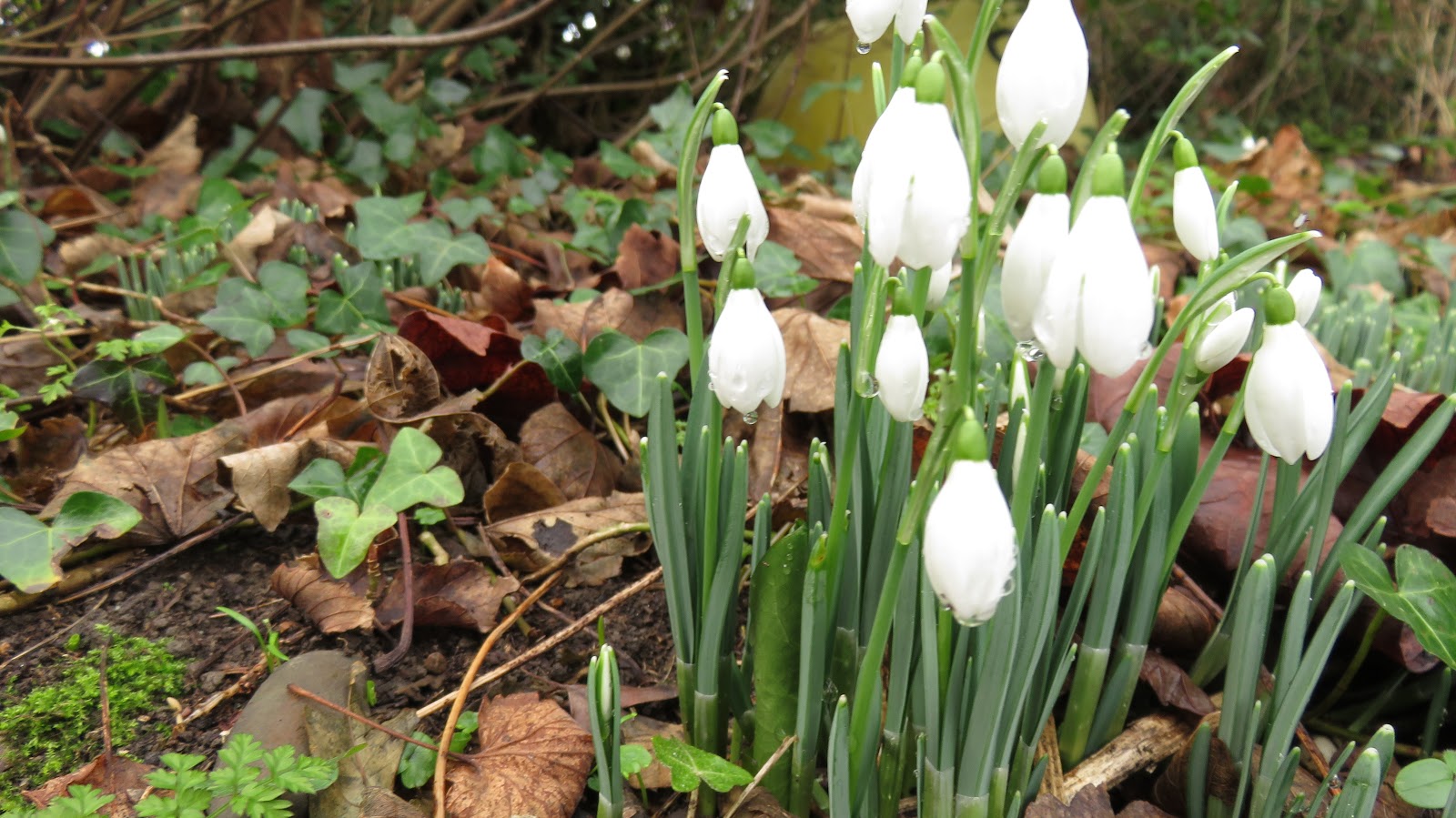
The snowdrops are already in bloom - have been since Christmas - I spotted some daffodils today, and already the days are a good bit longer.
Imbolg (also Imbolc) is a time of transition and initiation, both a gateway and a celebration. The word 'Imbolg' translates from Gaelic as 'in the belly' after the swollen abdomen's of the pregnant ewe's. The Festival of Brigid is celebrated on 1st February all across Ireland and increasingly in countries where Celtic soul beats strongly in the hearts of many. Imbolg heralds days growing longer and buds starting to open as our sap rises too. Brigid is renowned both as a pagan goddess and a Christian saint. She was born in Faughart in Co. Louth, just a few miles from here. And although she is one of the patron saints of Ireland, she also has deep associations with Wales and Glastonbury.
Here are some links you might like to follow to find out more about this archetype of the divine feminine in Celtic culture.
Brigid's Way - links to the place most associated with her in Kildare.
The Newgrange website has more great information about the origins of Imbolc and about the passage tombs at the hill of Tara where the sun lights up the altar on both Samhain and Brigid's Day.
* * * * * * * *
This lovely poem by Kieran Murray can be read in its entirety on the Brigid's Way website.
Brigid
For our Pagan Goddess
The Flame it burned bright As nineteen priestesses Tended it every night.
And the other St Brigid Her Christian counterpart When accused of being wicked Held hot coal to her heart.
So we honour both Brigids On their Feast Day the same As we craft a reed cross At Imbolc in their name.
This is the Celtic holiday of Imbolc, St Brigid's Day and the first day of the Celtic Spring.
Last night I got a lovely text from my friend Joanna about a tradition around St Brigid that I'd never heard of before.... She wrote:
On St Brigid's Eve, don't forget to put out the Bratóg Bríde (Brigid's little cloak) (Bríde pronounced breed) overnight. It's a piece of cloth, scarf or ribbon which St Bridget would bless in passing. The bratóg would help wearers with headaches and sore throats throughout the year to come.
I didn't manage to get out yesterday to gather rushes to make a Brigid's Cross for today - perhaps I'll still do it later in the day. It was a very strong tradition when I was growing up and many in this area are keeping the tradition alive. I loved the symbol of that cross, the symbol of the cycle of the year, continuing regardless.
Brigid was the goddess of the hearth, fertility and creativity among many other things. Her presence and power was so strong that she was adopted as a Saint by the Catholic Church as Christianity spread through Ireland in the 5th and 6th centuries. Now there are many festivals around the country that celebrate all aspects of the woman, the goddess and the saint.
I was looking for a piece of music I'd once heard to share with you but came across this lovely video instead .... posted by a blog which no longer seems to be active - nefaeriaofetsy.blogspot.com
The music is beautiful - a mix from Loreena McKennitt and some other voices - but there is lots of information about Brigid the Goddess and her place in Celtic Mythology, about Brigid the Saint and her place in the Christian church and lastly about Imbolc. If you're interested in folklore you might find this an entertaining read. At the end it also gives a list of sources for the information.
Today, at the Brigid of Faughart Festival, I attended a lovely singing workshop with Noirin Ni Riain who is a wonderful singer in the traditional Irish style, and a world recognised teacher and expert in Gregorian Chant as sung by the monks at Glenstal Abbey in the West of Ireland. She actually lives at the monastery and continues her studies of the Celtic Church and its music.
Here is Noirin singing Ode to Brigid.
I learned today that Imbolc is the time of new beginnings - when we sow the seeds for the coming year.
I came away with lots of ideas and plans. Now I just need to sit down and put some of them into action. And the first of these is to catch up with all the lovely new people who came to my blog from last week's party. It's been such a busy week and I've only managed to visit about two thirds yet. So this week, I promise to get by and say hello.
Are you starting anything new at this time of year? You know I love to hear.
Have a wonderful week.